
Merge Ragdoll Fighting
CASUAL AZUR GAMESArcade
4.6560.00 Reviews
- Version
- 0.0.61
- Installs
- 10.00M
- Age Rating
- Teen
Screenshots
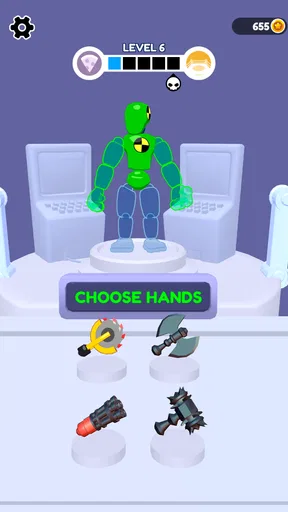
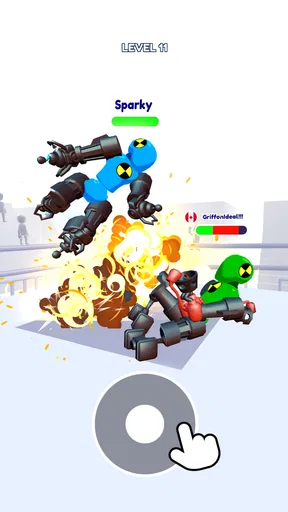
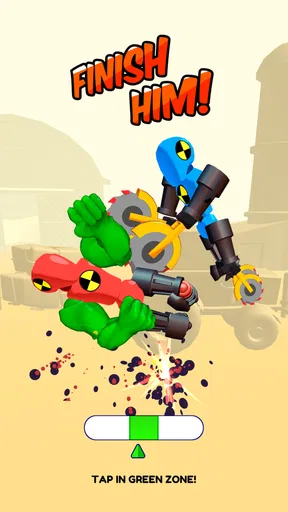
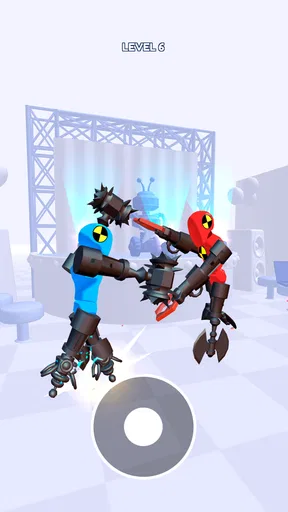
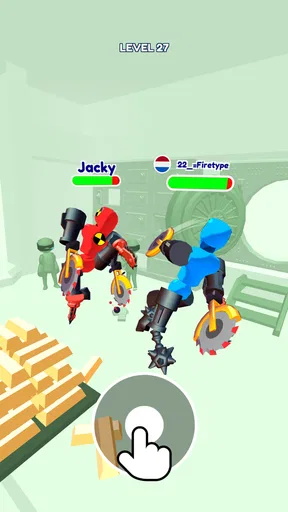

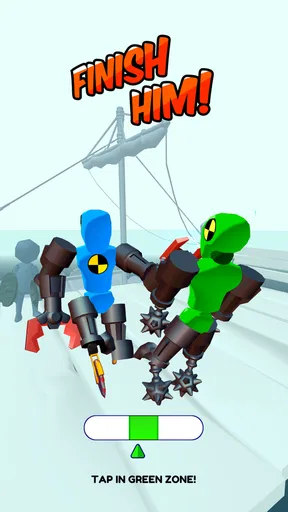
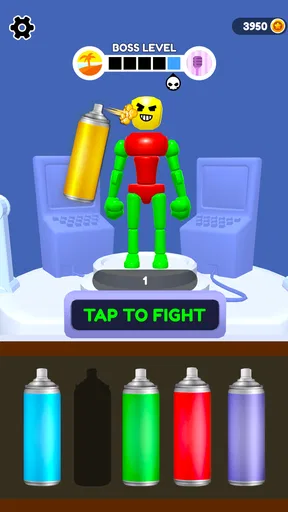
Our Review of Merge Ragdoll Fighting
 Analysis by Appyee
I went into Merge Ragdoll Fighting expecting a quick arcade distraction, and that is exactly where it works best. The basic idea is easy to understand: combine monster DNA to create a mutant fighter, then send that character into ragdoll-style battles. What makes the game worth a closer look is not a complicated story or a huge collection of modes, but the small chain of decisions between one fight and the next. I choose a creature combination, watch the result enter combat, react to the outcome, collect the reward, and then decide whether I want to try again with a different approach.
That loop gives the game a clear identity. It is not trying to replace a deep fighting game, and it does not offer the careful timing of a traditional arcade brawler. Instead, it turns monster merging into the preparation stage for short, physical-looking clashes. The appeal is immediate feedback: a mutant either seems better suited to the next opponent or it does not, and the battle makes that result visible through exaggerated movement and ragdoll reactions.
From a simple merge to the first clash
The first action is deliberately uncomplicated. I begin by combining DNA from different monsters, with the goal of producing a fighter capable of winning the next encounter. That makes the merging screen more than a decorative collection area. It is the point where I make the one meaningful decision before the action starts: do I keep experimenting with combinations, or do I commit to the mutant I have created?
This simplicity is useful on a phone. I do not need to study a long tutorial or memorize a large control scheme before understanding what the game wants from me. The concept can be explained in one sentence, but the result of each combination gives me a reason to test another. Even when the decision is not especially deep, the visual transformation helps it feel like an action rather than a menu tap.
The game belongs firmly to the arcade side of mobile gaming, and that affects how I judge it. I am not looking for a carefully balanced tournament system here. I am looking for a fast exchange between preparation and spectacle. The mutant creation gives me a short planning moment, while the fight supplies the immediate payoff. That division keeps the opening minutes approachable for younger players and for anyone who wants something that can be understood without a large time investment.
There is also a useful practical distinction between playing for progress and playing for curiosity. If I care mainly about winning, I am likely to favor combinations that appear dependable and repeat the approach that worked. If I am playing for amusement, experimenting becomes the point. The second approach makes the game more entertaining because the DNA system is not only a route to victory; it is also a reason to see what kind of fighter appears next.
Why the preparation matters
The merging stage creates a small pause before every burst of action. That pause is important because it gives the battles context. Without it, the fighting would be a sequence of disconnected animations. With it, I feel that the result belongs to the choice I just made, even though the overall system remains light and accessible.
My advice is to avoid treating every merge as a permanent commitment in your head. The game is more enjoyable when I view each attempt as a quick test. A combination that looks promising may not produce the result I expect, while a strange-looking mutant can still make the next encounter entertaining. This mindset reduces frustration and suits the arcade format better than trying to optimize every decision from the beginning.
For a child or teenager, the appeal is easy to see: monsters, transformation, and physical combat are presented in a format that gets moving quickly. The content rating is Teen, so I would still check whether the tone and fighting style suit the particular player rather than assuming it is appropriate for everyone. Adults who enjoy short mobile sessions may also find it appealing, especially if they like watching unusual characters collide more than mastering complex controls.
The fight as immediate feedback
Once the mutant enters battle, the game shifts from choice to observation and reaction. The ragdoll presentation gives each clash a loose, physical quality. Characters do not feel like static icons exchanging invisible points; their movement is the main source of feedback. Hits, falls, and reversals are easy to read, which helps the result feel satisfying even when the underlying mechanics are simple.
This is where the game separates itself from a standard merge puzzle. In a conventional merge title, the reward is usually the appearance of a higher-level object or the clearing of a board. Here, the merge is connected to a visible confrontation. I get to see whether the creature I assembled can actually survive the next encounter, and that makes the preparation feel more purposeful.
The feedback rhythm is quick: create, fight, see the outcome, and prepare again. I do not have to wait through a long narrative sequence to understand whether my choice helped. That makes it suitable for a short break, such as playing while waiting for an appointment or taking a few minutes away from work. The game does not demand the same uninterrupted attention as a longer action title, although the repeated battles can still encourage me to continue beyond the session I originally planned.
One of the more useful ways to play is to separate visual excitement from actual decision quality. A dramatic ragdoll moment can make a battle feel close or decisive, but I should not assume that the most entertaining animation represents a new strategy. I get better value from paying attention to the result of the encounter and using that information when choosing the next DNA combination. The spectacle is the hook; the repeat decision is what keeps the loop moving.
Where the rhythm becomes repetitive
The same rhythm that makes the game accessible can also limit its staying power. Players who want elaborate combos, precise blocking, character-specific move sets, or a large competitive skill ceiling may find the combat too light. The game’s strength is that it removes friction, but removing friction also means there are fewer layers to master.
I would not choose this as my main fighting game if I wanted to practice reaction timing or learn a roster of distinct warriors. A dedicated fighting title is a better choice for that. I would also skip it if I dislike repeated trial-and-error with monster combinations. The central pleasure comes from seeing what happens after preparation, so a player who wants full control over every exchange may feel that the battles are more passive than expected.
On the other hand, that reduced complexity is exactly why it works as a casual arcade game. I can enjoy the physical feedback without needing to become an expert. The fights are closer to quick visual challenges than to serious competitive matches, and judging them by that standard gives the game a fairer evaluation.
Rewards, resets, and the reason to start another session
After a successful encounter, the reward is not only the immediate satisfaction of winning. It also reinforces the next decision. I have a reason to continue merging, test another mutant, and see whether the following battle changes the pattern. This is a compact reward structure: the game gives me an outcome, then turns that outcome into motivation for another attempt.
The free price makes that loop easy to sample. I can install it without paying upfront and decide through actual play whether the repeated merge-and-fight cycle suits me. There are in-app purchases priced at $11.99 per item, so I would approach optional spending carefully. The important question is not whether a single purchase exists, but whether I am still enjoying the decisions without feeling pushed to buy something. For a casual game, I prefer to set a personal limit before spending rather than making a purchase simply because a difficult encounter interrupts the rhythm.
The game has reached over ten million installs and carries an average rating of 4.6 from around fourteen thousand ratings, which suggests that its straightforward arcade formula has found a substantial audience. I read those figures as evidence of broad appeal rather than proof that every player will enjoy it. A popular short-session game can still feel too repetitive for someone who wants deeper systems, and a modest-looking game can be exactly right for someone who wants a few minutes of uncomplicated action.
The reward is most effective when I treat it as a prompt rather than a finish line. Winning should make me curious about the next mutant, not merely encourage me to repeat the same action without thought. I get more from the game when I use a successful fight to ask what changed: was the combination more effective, did the opponent create a different challenge, or did the ragdoll outcome simply make the encounter look more dramatic?
How a normal short session feels
Imagine that I have ten minutes before leaving home. I can open the game, merge a couple of monster elements, enter a fight, and see the result without committing to a long campaign. If the outcome is satisfying, I may try one more combination. If it is not, the low barrier to restarting means I can stop without feeling that I abandoned a complicated mission.
That makes it a better companion for small gaps in the day than for a planned evening of concentrated gaming. I would use it when I want a quick burst of cartoon-like combat and a simple decision to occupy my attention. I would not use it when I need a quiet game, because the fighting feedback is the central attraction, or when I want a story that develops over extended sessions.
The reset after a battle is a key part of this experience. The game does not ask me to preserve the emotional weight of one fight for a long time. A loss is a setback, but it also becomes an invitation to adjust the next mutant. That keeps failure from becoming too heavy. The downside is that victories can feel equally temporary: once the result has been seen, the next merge quickly replaces it as the focus.
The reset is both convenience and limitation
Resetting quickly is convenient for casual play. I can try a different approach instead of spending a long period rebuilding a damaged team or navigating a complicated recovery system. This is one of the game’s strongest qualities for impatient players. The action remains close to the decision, and the next attempt is always within reach.
However, the same design can make progress feel less meaningful than it would in a larger arcade adventure. If I want a detailed sense of developing a favorite fighter over time, I may find the loop too disposable. The mutant is exciting because it is new, but novelty alone may not hold my attention indefinitely. The game is at its best when I want a series of compact experiments, not when I want a long-term character-building project.
A practical tip is to change only one part of my approach at a time when I am trying to understand the results. If I alter every possible choice after a loss, I learn very little from the next battle. Keeping the experiment focused makes the merge stage more interesting and gives the feedback more value. This is a small habit, but it turns the game from random tapping into a clearer cycle of test, result, and adjustment.
Device fit, audience, and expectations
The game supports devices running Android 7.0 or later, which covers a wide range of Android phones and tablets. I would still keep expectations realistic: compatibility does not make the experience identical on every device, and the appeal depends more on whether I enjoy the visual fighting loop than on having the newest hardware.
CASUAL AZUR GAMES has positioned this release as a free arcade game rather than a premium, one-time purchase. That matters when comparing it with alternatives. A paid arcade game may offer a more contained experience without purchase prompts, while a traditional fighting game may provide deeper controls and more deliberate mastery. This title offers a different trade-off: easy entry, mutant experimentation, and fast resets in exchange for less mechanical depth.
The current version is 0.0.61, and I would keep the app updated through the normal store process so that I am playing the version intended for current users. I would not install it expecting a fully featured console-style fighter. I would install it expecting a compact mobile loop that makes the next battle tempting because the previous merge produced an immediate, visible result.
My verdict on the complete loop
The action is the DNA merge, the feedback is the ragdoll fight, the reward is the win and the invitation to test another mutant, and the reset is the quick return to preparation after the encounter ends. Each part supports the next. That structure is why the game remains approachable even when its individual systems are not especially deep.
The best reason to play is the short distance between an idea and its consequence. I can make a creature, watch it fight, and immediately decide whether I want another attempt. That is a strong fit for casual arcade players, monster-collection fans who enjoy visual experimentation, and anyone who likes games that explain themselves through action rather than long instructions.
My reservations are equally clear. Repetition may arrive quickly if I need constant mechanical variety, and players looking for precise fighting controls should choose a deeper alternative. The presence of optional purchases also means I would keep spending deliberate instead of treating every obstacle as a reason to buy. Those are not deal-breakers for me, but they define the audience.
Overall, I recommend it as a free, pick-up-and-play arcade option rather than as a serious fighting experience. Merge Ragdoll Fighting succeeds when I want a playful experiment with a fast visual payoff and a clean reason to begin another round. If that action-feedback-reward-reset pattern sounds appealing, it is easy to try; if I want strategy that remains demanding after many sessions, I would look elsewhere.
Verdict
Strengths of Merge Ragdoll Fighting
- Simple controls make it easy to start playing immediately.
- Short battles are ideal for quick gaming sessions.
- Ragdoll physics create unpredictable and funny combat moments.
- Merging mechanics add progression beyond basic fighting.
- Works well for players who enjoy casual, low-pressure gameplay.
Limitations of Merge Ragdoll Fighting
- Combat can become repetitive after extended play.
- Physics sometimes make attacks feel random rather than skill-based.
- Progress may slow down without frequent upgrades or rewards.
- Advertising can interrupt the flow between battles.
- Limited strategic depth may not satisfy competitive players.
Other Releases by CASUAL AZUR GAMES
View All
Worms Zone .io - Hungry Snake
Action4.3

Stack Ball - Crash Platforms
Arcade4.5

STAR: Super Tricky Amazing Run
Arcade4.2

State.io — Conquer the World
Strategy4.1
Similar Picks in This Category
View All
Subway Surfers
SYBO Games4.6

Stickman Party 234 MiniGames
PlayMax Game Studio4.6

Subway Princess Runner
Ivy4.4

Temple Run
Imangi Studios4.2

Zombie Tsunami
Mobigame SAS4.6
Stack Ball - Crash Platforms
CASUAL AZUR GAMES4.5
Frequently Asked Questions
What is Merge Ragdoll Fighting and how does the gameplay work?
Merge Ragdoll Fighting is a casual action game that combines character merging with physics-based battles. You collect or unlock ragdoll fighters, combine matching units or equipment to improve their strength, and then use them in arena-style fights. The exaggerated movements and unpredictable collisions make each battle entertaining, although the experience is designed more for quick, relaxed sessions than for deep competitive combat.
Is Merge Ragdoll Fighting free to download and play?
The game is generally available as a free download, allowing players to begin playing without an upfront purchase. However, free-to-play games commonly include optional advertisements, rewarded videos, and in-app purchases for currency, upgrades, or other conveniences. It is worth checking the store listing on your Android or iOS device for the current pricing, available purchases, and any regional differences before downloading.
Does Merge Ragdoll Fighting require an internet connection?
Some parts of Merge Ragdoll Fighting may be playable without a constant internet connection, particularly basic battles or progression activities already stored on the device. Nevertheless, advertisements, cloud features, updates, purchases, and certain online content may require connectivity. Offline behavior can also change after updates, so players should not assume that every feature will remain available without Wi-Fi or mobile data.
Is Merge Ragdoll Fighting suitable for children?
Merge Ragdoll Fighting uses cartoon-style ragdoll characters and exaggerated physical combat rather than realistic violence, which may make it suitable for a broad audience. Even so, parents should review the age rating, advertising content, and in-app purchase settings before allowing younger children to play. The game can also encourage repeated play, so parental controls and reasonable screen-time limits are recommended.
What are the main advantages and possible drawbacks of Merge Ragdoll Fighting?
The main advantages are its simple controls, quick matches, humorous ragdoll physics, and satisfying merge-based progression. It is easy to understand and works well for players who want short bursts of entertainment. Potential drawbacks include repetitive battles, frequent advertisements, progression that may feel slower without optional purchases, and limited strategic depth compared with more advanced fighting games. Your experience may depend on device performance and the current version.
Play our best games!


